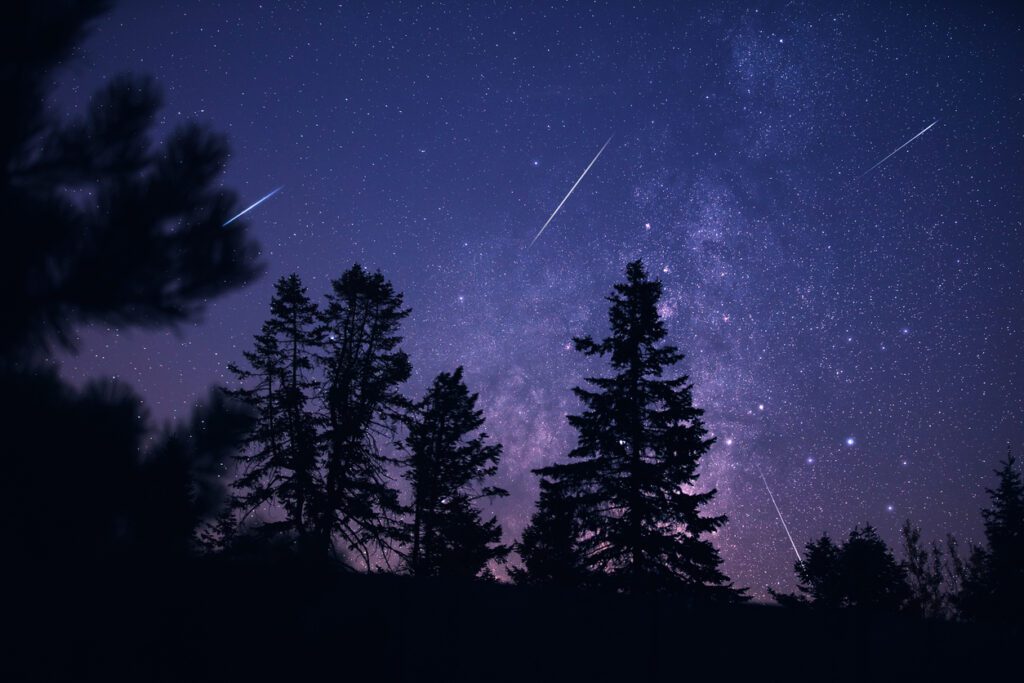
There’s nothing quite like lying on your back beneath a night sky, waiting for that first streak of light to dart across the darkness. If the Perseid meteor shower hasn’t yet found its way onto your summer must-do list, trust me, it’s worth the late night. I’ll never forget my first Perseids. The night felt hushed, the world pausing every so often at the sound of a spontaneous gasp when a meteor painted a silver trail overhead. In that moment, the universe felt close, like we were all being let in on a secret.
Each year, this little gift from nature offers a new chance for awe. With a bit of timing and planning, experiencing the Perseids easily becomes a memory you’ll want to hold onto. So, when is the best time to look up?
Best Nights to Watch
The Perseids appear each August, peaking this year from August 11 to August 13. For the best view, plan to watch after midnight and into the pre-dawn hours, when the show is at its peak. Select a location with an unobstructed view of the sky, preferably one that is away from artificial lighting. You don’t need to recognize constellations; look up and relax. Give your eyes about 20 minutes to adjust to the dark, and you’ll soon spot meteors streaking overhead.
Note: The Perseid meteor shower will be affected by a bright, waning gibbous moon tonight. The moon will be 86% illuminated and will likely wash out fainter meteors, making it more challenging to see them.
Find That Perfect Spot
Where you watch is crucial for meteor viewing. To reduce light pollution, select a location far from city lights, such as a rural area, a wide-open field, or a secluded campground. The darker your surroundings, the better the visibility of meteors.
Some of my best Perseid memories are from nights in Arnold, CA. The stars (and the meteors streaming through the sky) felt just a bit more magical. If you can’t go far, consider a local park or even your backyard, provided it offers some shelter from bright lights. Even a short drive away from town makes a world of difference.
I usually bring a reclining chair or a stack of pillows, and having good neck support is key to enjoying the experience. Make yourself comfortable, since you’ll probably stay out longer than you expect.
Tips for an Unforgettable Stargazing Night
There’s more to these nights than just looking up. A little preparation makes all the difference.
You might start warm, but before long, the night will seep in, especially if you’re staying still. Layers are your friend: a favorite hoodie or throw blanket always finds its way into my bag.
Hot chocolate or another beverage in a thermos adds something special, and if you’re as popular with mosquitoes as I am, don’t forget the bug spray. Snacks and water are smart if you’re settling in for a while.
- Look With Your Eyes, Not Your Devices
I’ve tried to snap photos, but honestly, no camera captures the feeling of seeing meteors dart across the sky. Save yourself the trouble and permit yourself to watch, and let those memories take root the old-fashioned way.
- Share (or Celebrate) the Moment
One year, I watched with the daughter of my heart, Stacy, the air filled with whispered excitement and laughter. Other times, it’s just been me and the sky, and that’s its kind of magic. There’s something powerful about sharing wonder, even in silence.
Your eyes need time to adjust to the darkness. Approximately twenty minutes should suffice. As you wait, you’ll notice even more stars twinkling to life, and when the show begins, you’ll be ready to see it all.
Why It Matters
Meteor showers have a way of reminding us how vast the universe is, but also how deeply we’re all connected beneath the same sky. I sometimes find myself thinking about other people, miles or continents away, watching the same meteors burn through the night and making the same wishes.
Don’t be discouraged if the clouds don’t cooperate on a particular night. The Perseids leave trails for several days after their peak. Step into the night, breathe the cool air, and look up. You might catch something fleeting yet unforgettable.
Wishing you clear skies and just the right amount of wonder—now get out there and see the Perseids for yourself!
References: