
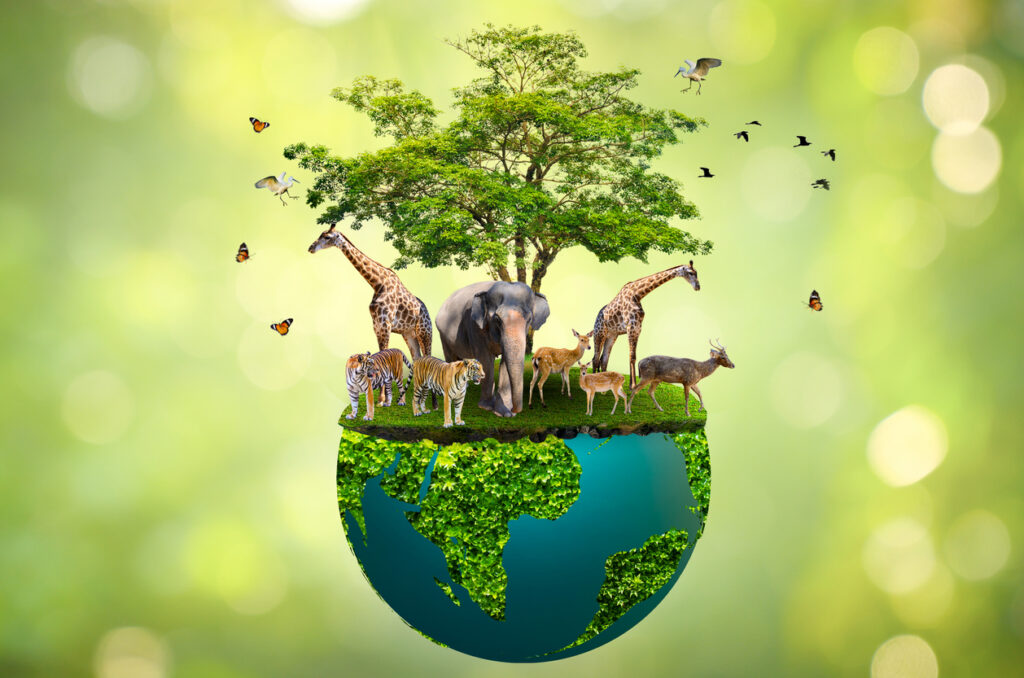
Every year on the third Friday in May, people around the world observe Endangered Species Day. In 2026, that day falls on May 15. It is not a celebration in the traditional sense. It is more of a pause. A moment to look honestly at the animals quietly disappearing from the Earth and ask ourselves an important question:
What kind of world do we want to leave behind?
For many of us, animals are not simply creatures that exist around us. They are companions, teachers, symbols of freedom, and reminders that humans are not alone in this great living story. Some animals soar above us. Some swim beneath the oceans. Some move silently through forests we may never personally visit. Yet their survival is connected to ours in ways we often overlook.
And yes, among those animals are wolves.
Are Wolves Endangered?
The answer is complicated. Some wolf populations have recovered over the years thanks to conservation efforts, while others remain threatened or endangered depending on the region and species. The most critically endangered wolf in the world is the Red Wolf, native to the southeastern United States. Fewer than two dozen are believed to remain in the wild.
Another highly endangered species is the Mexican Wolf, the rarest gray wolf subspecies in North America. Once nearly wiped out entirely, careful breeding and reintroduction programs have slowly helped their numbers recover.
Wolves have long been misunderstood. Stories portrayed them as villains lurking in the dark, when in reality, wolves are intelligent social animals that live in close family units. They care for injured pack members. They mourn losses. They teach their young. They work together.
The Animals We Are Losing
Wolves are not alone.
Among the animals currently facing serious threats are:
- African Forest Elephant
- Amur Leopard
- Sea Turtle
- Orangutan
- Black Rhinoceros
- Vaquita
- Monarch Butterfly
- Snow Leopard
Some of these animals may disappear within our lifetime if meaningful protections are not maintained.
What Can Ordinary People Do?
One of the easiest traps to fall into is believing conservation is someone else’s responsibility. Large organizations matter, certainly, but small actions multiplied across millions of people matter too.
We can help endangered species by:
- Supporting wildlife conservation organizations
- Protecting natural habitats and open spaces
- Planting native flowers and pollinator-friendly gardens
- Reducing plastic waste
- Learning about local wildlife
- Driving carefully in wildlife crossing areas
- Refusing products tied to illegal poaching or habitat destruction
- Teaching children to respect animals rather than fear them
- Speaking up when environmental protections are threatened
Coffee Thoughts
Sometimes I think the measure of humanity is not found in how powerful we become, but in how gently we treat the vulnerable.
The endangered animals of this world cannot hire attorneys. They cannot speak at conferences. They cannot vote. Their survival depends entirely on whether human beings decide they matter.
And they do matter.
The howl of a wolf across a distant forest…
These are not interruptions to human life.
They are part of the music of Earth itself.
And hope is still a choice.
Thank you for reading this blog post. If you have any questions or comments, please leave them in the Comments section below.
Copyright © 2019. I Don’t Know All The Answers, Nikki Mastro.
All of my photographs and documents are copyrighted.
The main photo included in this blog post is from the iStock.com library.
No part of this website, including text, photographs, and documents, may be reproduced, stored in a retrieval system, or transmitted in any form or by any means without written permission from the copyright holder. All unauthorized use is strictly prohibited. If you choose to copy or share any information from my site, you must provide a link to the source. I appreciate your cooperation.
For further information concerning “I Don’t Know All The Answers.”
– Website and Blog: https://www.idontknowalltheanswers.com
– Facebook: https://www.facebook.com/Nikki.L.Mastro/
– Instagram: https://www.instagram.com/i_dont_know_all_the_answers/
– LinkedIn: https://www.linkedin.com/in/nikki-mastro-05455a3a/
– Youtube Channel: https://www.youtube.com/@idontknowalltheanswers1954